All Saints by the Lake, Dorval
December 14, 2025
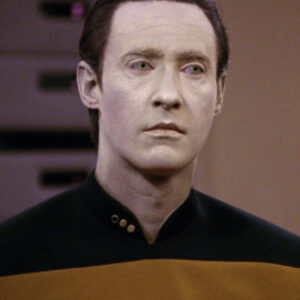
This is not the kind of AI we’re talking about.
***
Jesus answered them, “Go and tell John what you hear and see: the blind receive their sight, the lame walk, the lepers are cleansed, the deaf hear, the dead are raised, and the poor have good news brought to them. And blessed is anyone who takes no offence at me.”
Listening to this list, one might wonder, who could possibly take offence at Jesus? All this sounds like the best things that could possibly be happening – healing, new life, good news brought to the poor. And John’s disciples, serving as go-betweens between their master in prison and the promised Messiah whom he proclaimed and baptized, have witnessed it all with their own eyes.
It’s alarming, though, how many people might in fact take offense, both at the idea of people being helped, and at the idea that it’s important to know what’s happening and report on it accurately.
In the aftermath of the 2016 election in the US, when surprising numbers of my fellow Americans began to reveal depths of cruelty and hard-heartedness that they had hitherto kept under wraps, the frustration felt by normal, compassionate humans in this conversation was quickly condensed into the brief and powerful sentence: “I don’t know how to explain to you that you’re supposed to care about other people.”
Nine years later, with the rise of bots and AI, I have a second sentence to add: “I don’t know how to explain to you that you’re supposed to care whether something is true or not.”
I’m currently reading a very fun science fiction novel with a character that’s a sentient AI living in a spaceship. I understand the appeal of the idea of an intelligence other than our own with which to interact; such a thing might even teach us something about ourselves. And some of the work being done in machine learning today is valuable, such as tools that can identify cancerous tumours by finding patterns imperceptible to humans, or simply trawl through volumes of data for which the human brain doesn’t have the capacity.
But the “AI” that has captured most of our attention (and hundreds of billions of dollars) over the past two or three years, is not either of these things. It is simply a very fancy predictive text or image generator. It is glorified autocomplete. It takes massive amounts of words and images – mostly stolen from the human beings who created them – and recombines them into a plausible lowest common denominator that, if it bears any relationship to reality, does so only by chance.
Let loose in the population, these things are sucking up massive amounts of energy, embedding plagiarism firmly into school curricula, making possible the creation of vast amounts of nasty pornography, and causing people to have psychotic breaks and teenagers to kill themselves. The only reason I’m not more terrified about their proponents’ claims that they will replace all our jobs within a decade, is that all the evidence indicates that they’re sufficiently useless that everything they produce has to be reviewed by a human, at the cost of more time and expense than it would have been to just do it properly in the first place.
What does profoundly concern me is the way that the AI slop is blurring our already dubious ability to tell the difference between truth and fiction – and, perhaps even more importantly, to care that there is a difference.
When Jesus sends John’s disciples back to him, he tells them “Go and tell John what you hear and see.” The disciples can bear witness because they have seen what has happened, and John knows and trusts them.
Literally as I was writing this sermon, I saw both a screenshot from Google’s AI insisting that a 2-quart Ziploc bag holds one quart of liquid, and a news article about a chatbot on which the Canada Revenue Agency spent eighteen million dollars, which turned out to be wrong two-thirds of the time. One of these examples is considerably more concerning than the other (unless you’re the person who was counting on being able to fit two quarts of something in a Ziploc) but they do make the point rather neatly.
When we have no idea whether we can trust that the information in front of us comes from a human being who knows what they’re talking about or a machine that’s just choosing the next most probable token, our ability to understand and function in the world breaks down.
To be clear: I’m not saying that fiction is bad, as such. I am, as anyone who knows me even slightly knows, a voracious consumer – and sometimes producer – of fiction. I love art, which is why I believe that artists deserve compensation for their creative work and people encountering art deserve to know whether it came from the imagination of an actual human being.
But hundreds of bland, “heartwarming” stories cluttering up Facebook, claiming to be true or at least not acknowledging that they aren’t, accompanied by improbably gauzy images, all of which turn out to have been generated by a machine – that is not art, it is lies.
Human life, in all its weird, surprising, individual glory, deserves so much better than this mass-produced pablum. God gave us hands and hearts, imaginations and voices, so that we could use them, to learn and to explore, to entertain and to dream. The world around us is rich with real stories – stories that really happened, or were honestly made up by creative people. Why on earth would we hand over that power to forces that are not only incapable of truth but incapable of understanding why truth is necessary?
And so, having come this far, I am realizing that perhaps the two despairing sentences I cited earlier – “I don’t know how to explain to you that you should care about other people” and “I don’t know how to explain to you that you’re supposed to care whether something is true or not” – are actually the same.
Because caring whether something is true or not is, fundamentally, about caring about other people. It’s about respecting them enough to try to ensure that they’re not being lied to. It’s about being impeccable with your own word and calling out falsehood on the part of others. It’s about working for a world where fiction tells the truth by acknowledging that it is, in fact, fiction. It’s about humans doing the hard work of learning from, and teaching, and caring for, and storytelling to, other humans, instead of being seduced to outsource that fundamental labour – the very essence of what makes us human – to mindless machines.
In today’s reading from Isaiah, describing the road through the desert taken by the redeemed exiles as they return to the holy city, the prophet makes this funny and poignant remark: “no traveller, not even fools, shall go astray.” It seems like a throwaway line, but think about what it would mean for there to be a road that was safe even for fools. It would mean that everyone there was honest, and kind-hearted, and devoted to ensuring the safety of others instead of fleecing or attacking them.
It seems to me that today’s AI-boosting billionaires are doing precisely the opposite of that. They want to lead all of us, even those who aren’t fools, astray. They want to create a world where truth has no meaning, where cheating is a way of life, and where other people exist only to be exploited. They would take profound offence at Jesus if they saw him raising the dead and giving sight to the blind – and demanding that facts be attested by eyewitnesses – today.
In response, we must stand unequivocally with John the Baptist and Jesus. We must insist on the importance of what we see with our human eyes, and know with our human minds, and feel with our human hearts. We must refuse to concede that there is anything more important than healing the sick and bringing good news to the poor. That is the unalterable, essential basis of all our faith.
And having said that, I wonder whether this gives us some insight into that mysterious assertion of Jesus’, “among those born of women no one has arisen greater than John the Baptist; yet the least in the kingdom of heaven is greater than he.”
One could hardly be more assertive than John the Baptist about the basic importance of caring for others and knowing the truth. And yet, for Jesus, that is the jumping-off point, not the end. Jesus is about to show us not only how individuals can be given good news and hearing and healing: but how we can all see God, and a whole world can be raised from the dead and made new.
And that, my friends, is the greatest truth of all.
Amen.
Leave a Reply